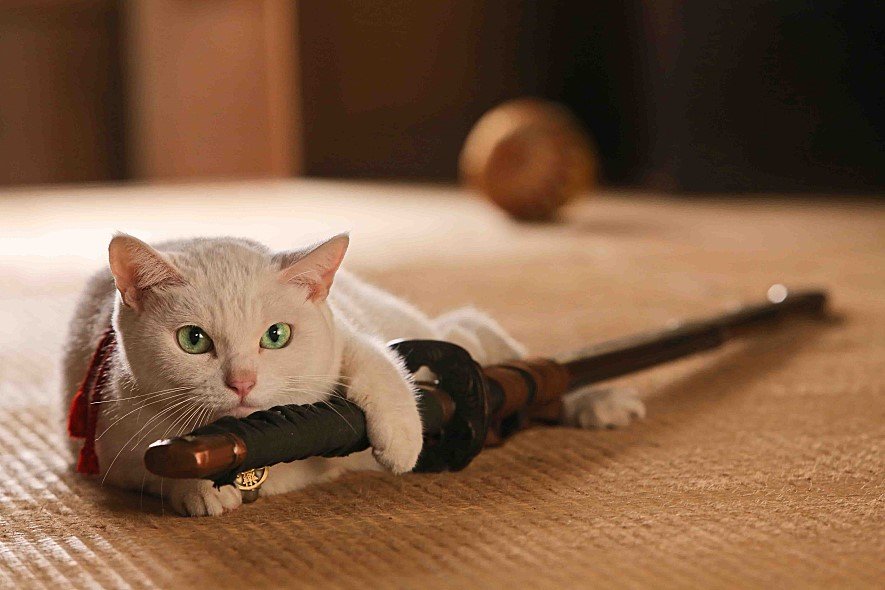
Samurai Cat is an unusual and charming comedy, but beneath its light tone lies a thoughtful idea about what it means to be a true samurai. The film suggests that strength is not measured only by the ability to use a sword. It can also be found in the decision not to harm people or animals without reason.
The presence of the cat gives the story much of its warmth. Japan’s affection for cats is especially visible here, and the film treats that affection with humor rather than sentimentality. The result is a samurai story that feels much gentler than the genre usually suggests.
Certain camera angles and close-ups of the actors’ faces are reminiscent of Korean films and television dramas. The actress playing the servant also has a look similar to that of some Korean actresses; at first glance, she might even be mistaken for one. The resemblance may be entirely coincidental, but it gives the film an unexpected sense of familiarity.
The protagonist’s family is another memorable part of the film. Their home feels warm and harmonious, while the final scene also brings the ordinary problem of making a living briefly to mind. It is a small touch, but one that keeps the story connected to everyday life.
What remains most strongly is the film’s view of the samurai spirit. Even an enemy may have a family who would mourn his death. That thought gives the story a quiet humanity and turns a light comedy about a samurai and a cat into something unexpectedly meaningful.