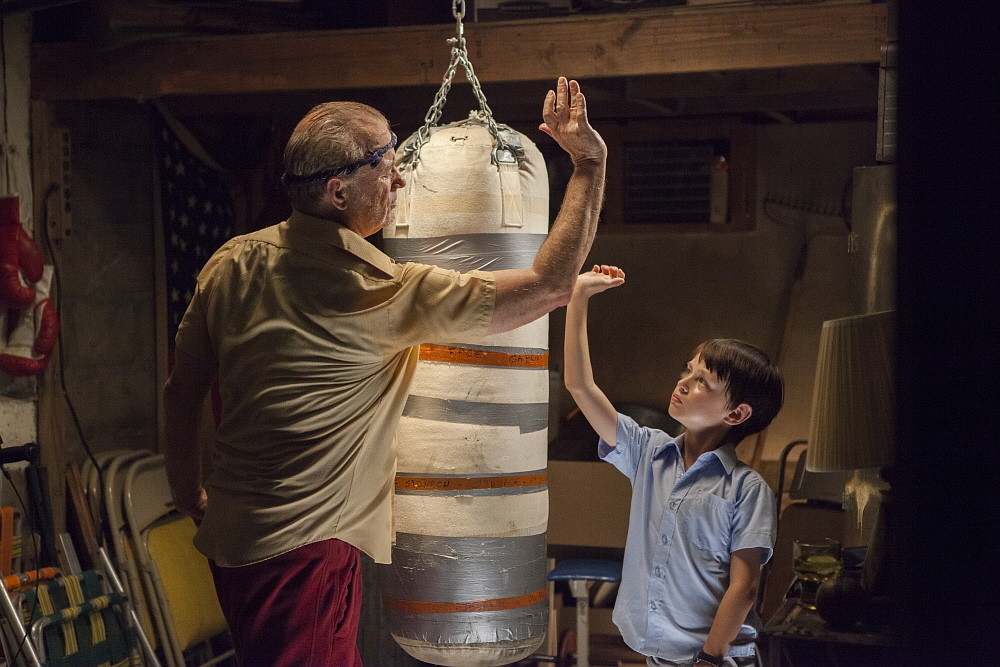
Vincent is not the sort of man anyone would immediately call a saint. He drinks, gambles, loses money at the racetrack, and rarely bothers to make a good impression. When his new neighbor Maggie needs someone to watch her son Oliver after school, Vincent becomes an unlikely babysitter—and hardly an ideal one. Yet as Oliver spends more time with him, a different side of the old man begins to emerge.
Vincent’s lack of financial sense does not make him a bad person. Beneath his rough behavior is a former soldier who once acted bravely, a husband who remains deeply devoted to his wife, and a lonely man carrying more sadness than he usually shows. Bill Murray makes those contradictions feel natural. Vincent can be irresponsible and caring, selfish and generous, difficult and strangely dependable, sometimes within the same day.
His relationship with his wife is one of the saddest parts of the film. She is living with dementia, but his love for her has not disappeared. After Vincent suffers a stroke and goes through treatment, he returns to discover that she has died while he was away. He was not even able to be with her at the end. The film does not erase this pain, but it also does not allow Vincent’s life to end there.
Oliver eventually chooses Vincent for a school presentation about saints. At first, the idea sounds almost ridiculous. Vincent is full of obvious faults, and he is frightened and vulnerable like anyone else. But that may be exactly why the title suits him. A saint does not necessarily have to be someone distant and perfect. It might be an ordinary person who continues to show kindness despite his own failures and suffering.
That is what makes Vincent memorable. He is not transformed into a flawless hero, and the film never needs him to be one. He is simply a deeply imperfect man in whom Oliver manages to see something good. Perhaps saints are not always found in churches or history books. Sometimes they are simply the difficult old man living next door.